


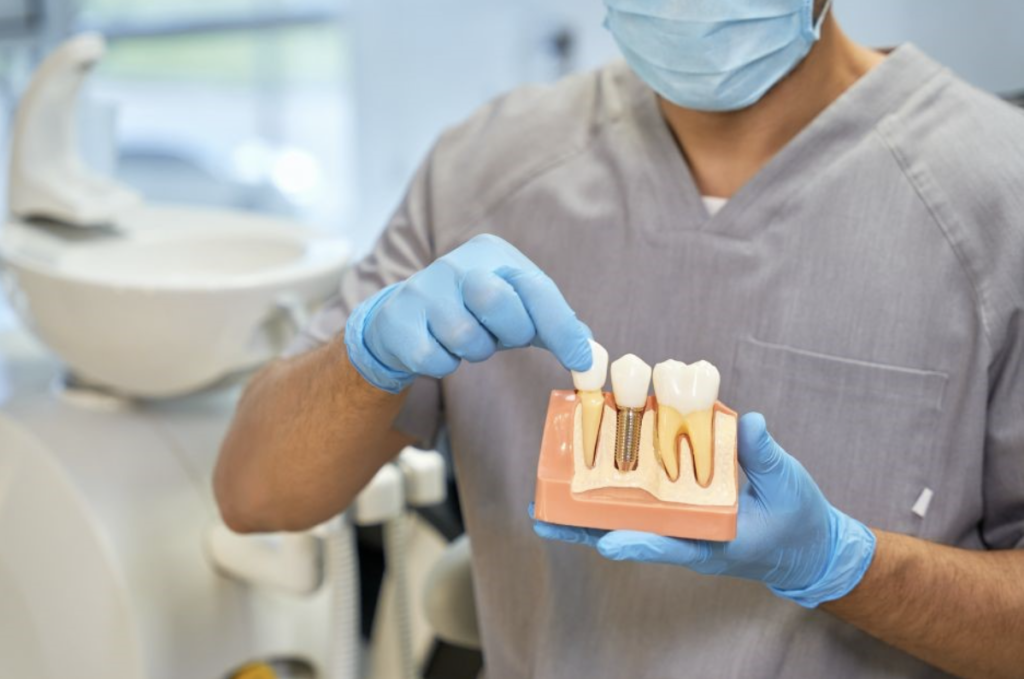

It’s one of the first questions patients ask once they’ve decided they want an implant: how long am I going to be out of action? It’s a fair question. Implants involve minor surgery and it’s natural to want to know what you’re signing up for before you commit.
The reassuring answer is that for most people, the disruption is pretty minimal, especially in the short term. Here’s a clear breakdown of what the recovery process actually looks like, from the day of treatment through to your final tooth being fitted.
The Short Version
Most patients are back to normal daily life within 24 to 48 hours of having an implant placed. The procedure itself is carried out under local anaesthetic, so there’s no general sedation to recover from. For a straightforward single implant, many people go back to work the following day.
The longer part of the process – the part that actually takes around three months – isn’t recovery in the traditional sense. It’s healing. Specifically, it’s the biological process of your jawbone fusing with the implant itself. That’s what makes the final result so stable and long-lasting and it’s largely happening beneath the surface while you get on with your life.
What to expect in the first few days
The day of your treatment is the one day we’d suggest taking it easy. Not because you’ll necessarily feel unwell but because rest supports good healing, and there’s no real reason to push it.
In the 24 to 72 hours after treatment, some mild swelling, tenderness, or bruising around the area is possible. Most patients manage any discomfort comfortably with standard over-the-counter pain relief. Some experience very little at all – it varies from person to person, but implant placement is generally well tolerated.
By the end of the first week, the gum tissue will have started to settle and most patients feel pretty much back to normal. If bruising does appear, it may take a few extra days to fade, which is worth bearing in mind if you have anything important coming up.
The three-month healing phase
This is the part that surprises some patients, not because it’s difficult but because it exists at all. Once the implant is placed, it needs time to integrate properly with the jawbone. This process is called osseointegration, and it’s what gives dental implants their exceptional stability.
Titanium – the material implants are made from – is uniquely well suited to this. The bone gradually bonds with the implant surface until the two become effectively one structure. Once that’s happened, the implant isn’t going anywhere.
During this phase, you won’t be sitting around waiting. Life carries on as normal. The three months is simply the length of time the body needs to do its work quietly in the background before the final crown can be securely fitted.
Fitting the final crown
Once your implant has fully integrated, your dentist will take a digital scan of the area. A custom-made crown is produced to match your surrounding teeth and it’s then secured directly onto the implant – typically by a small screw that connects the two.
Crown placement itself is a straightforward appointment. There’s no surgery involved and no additional recovery time needed. After that, you have a fully functional tooth that looks, feels and works like the real thing.
Does recovery differ for full arch implants?
For patients replacing a full arch of teeth rather than a single tooth, the process is more involved but it’s well managed. Rather than leaving you without teeth during the healing period, a temporary bridge is fitted on the same day as treatment. This means you leave the practice with teeth in place and can function normally while the implants integrate beneath.
During this phase, a softer diet is recommended for roughly two to three months to avoid putting excess pressure on the implants while they’re still bonding with the bone. It’s a sensible precaution rather than a major restriction and most patients adapt to it without much difficulty. Once we’re certain you’re healed, the final set of teeth is fitted.
What affects healing time?
Recovery is broadly predictable but a few individual factors can impact how smoothly it goes.
General health of course plays a role. Conditions like diabetes need to be well controlled going into treatment, as they can affect the body’s ability to heal. Vitamin D levels are something else to think about too, sufficient levels support bone health and are worth checking ahead of treatment if there’s any doubt.
Bone quality and quantity matter too. Patients with good bone density in the jaw tend to heal well. Where there’s been significant bone loss, a bone graft may be needed before or alongside implant placement, which can add time to the overall treatment plan.
Treatment complexity is the third factor. A single implant is a much simpler procedure than multiple implants placed across a full arch, and recovery reflects that.
All of this is assessed thoroughly at your consultation, so you’ll have a clear picture of your own timeline before any treatment begins.
Does it hurt?
Most patients are pleasantly surprised. The procedure is carried out under local anaesthetic, so you won’t feel the implant being placed. Afterwards, any discomfort is typically mild and short-lived. Some patients report needing no pain relief at all.
The idea of jaw surgery sounds daunting, that’s understandable. But implant placement is a routine procedure and the reality of recovery is usually much better than people are expecting.
A few tips to support your recovery
You’ll get specific aftercare instructions and following them carefully is the single most important thing you can do. Beyond that:
-
- Eat softer foods for the first few days if you’ve been advised to.
-
- Yes, you can still brush your teeth, just make sure you’re being gentle around the implant site.
-
- Avoid smoking during the healing period, it significantly affects how well the bone integrates with the implant.
-
- Attend your follow-up appointments so we can confirm everything is progressing as it should.
Staying consistent with aftercare will make the biggest difference to your recovery.
Worth the wait
Three months can feel like a long time when you’re keen to have the finished result. But the healing phase is what separates a dental implant from every other tooth replacement option, it’s what makes it permanent, stable, and genuinely natural feeling once it’s done.
If you’re considering an implant and want to understand what the process would look like for you specifically, get in touch with the Smile9 team to book a consultation. We’ll assess your suitability, walk you through the timeline honestly and answer any questions you have before you commit to anything.