


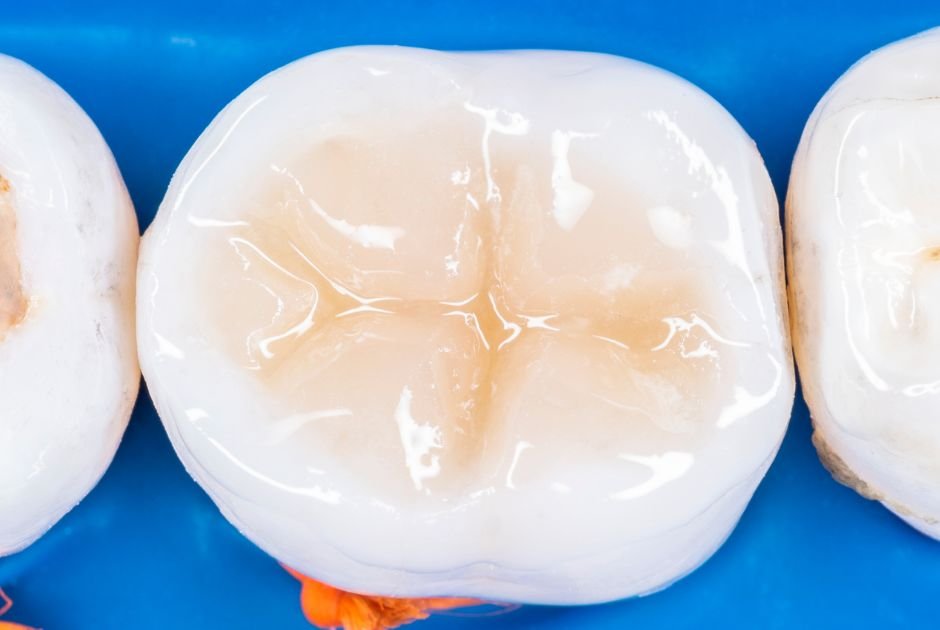

Most people don’t think about their teeth until something hurts. And by the time something hurts, what could have been a quick, straightforward filling has often become a much bigger conversation. Understanding the early signs of tooth decay – and acting on them – is one of the simplest ways to keep your dental treatment simple and your costs down.
Here’s what to look out for, and what’s actually happening inside your tooth when decay takes hold.
The warning signs you need to pay attention to
Tooth decay doesn’t always announce itself dramatically. In the early stages, the signs can be easy to dismiss or put down to something else. The three main indicators to watch for are:
Sensitivity in a specific area. If eating or drinking something hot, cold, or sweet causes a sharp or lingering sensation in one particular tooth – rather than generally across your mouth – it’s worth getting it checked. Generalised sensitivity can have other causes, but localised sensitivity in response to temperature or sugar is a common early signal of decay.
A hole or rough patch you can feel with your tongue. Teeth should feel smooth. If you notice a rough edge, a sharp spot, or what feels like a small hole when you run your tongue across your teeth, don’t ignore it. What you can feel on the surface may be the tip of a much larger problem underneath.
Black spots or dark marks on the tooth. These aren’t always decay – they can be surface staining from coffee, tea, or certain foods – but they can also indicate a cavity developing. The important distinction: only a dentist can tell the difference. Don’t assume dark marks are harmless, but don’t panic either. Get them assessed.
What’s actually happening inside your tooth
Understanding the anatomy of a cavity helps explain why early treatment matters so much.
Your tooth has two main layers: the outer enamel, which is very hard, and the dentine beneath it, which is softer and more porous. Decay works from the outside in – it starts as a breach in the enamel, then progresses inward. Here’s where it gets important: once decay passes through the enamel and reaches the dentine, it spreads much faster. The softer material offers far less resistance, which means what looks like a small hole on the surface can conceal a significantly larger cavity underneath.
Picture a patient who’s been putting off their check-up for a year or two. They notice mild sensitivity when they drink something cold but assume it’ll pass. When they finally come in, the visible hole is tiny – barely noticeable. But the X-ray tells a different story. The decay has ballooned into the dentine, and what could have been a simple filling six months ago now requires more involved treatment.
This isn’t scaremongering – it’s just how cavities work. A small filling placed early is straightforward and inexpensive. Left too long, decay can reach the nerve, cause significant pain, and lead to the need for a root canal. The biology makes early action the logical choice.
What causes tooth decay?
Decay is caused by bacteria in the mouth producing acid when they come into contact with sugar. But it’s not just about how much sugar you consume – it’s about how frequently your teeth are exposed to it throughout the day. Constant snacking, sugary drinks sipped slowly, or frequent sweet treats give bacteria repeated opportunities to produce acid and wear down enamel.
Other contributing factors include brushing frequency and technique, flossing – cavities often begin between teeth where a toothbrush simply can’t reach – and the consistency of your professional check-ups and cleans.
Why check-ups catch what you can’t
Some cavities are visible to the naked eye. Many aren’t – particularly those forming between teeth, which are often completely symptom-free in the early stages. This is where X-rays become invaluable. At Smile9, X-rays are taken as part of your routine assessment and can identify decay between teeth long before it becomes painful or visible – which means it can be treated while it’s still simple.
Attending twice-yearly check-ups isn’t just good habit. It’s the most reliable way to make sure small problems are caught before they become expensive ones. You can find out more about what a routine appointment involves in our step-by-step check-up guide.
Can a cavity heal on its own?
This is one of the most commonly searched questions about tooth decay, and the honest answer is: once a cavity has formed, no. The tooth cannot repair itself. A filling needs to be placed to stop the decay progressing and restore the tooth structure.
The exception – and it’s a narrow one – is very early-stage enamel weakening before a proper cavity has developed. At this point, fluoride and improved oral hygiene can sometimes help remineralise the enamel and halt progression. But this window is small, which is another reason why catching things early matters.
Six things worth doing right now
- If you notice sensitivity to hot, cold, or sweet food in a specific tooth, book an appointment – don’t wait for pain.
- Run your tongue over your teeth occasionally. Rough patches or sharp edges are worth mentioning at your next visit.
- Don’t self-diagnose black spots. Get them checked – staining and decay look similar and only a dentist can tell them apart.
- Reduce how often you’re exposing your teeth to sugar throughout the day, not just the total amount.
- Floss. Cavities between teeth are common and largely preventable.
- If a filling is recommended, don’t delay. A small filling now is far simpler – and cheaper – than a root canal later.
Book a check-up at Smile9
If you’re overdue a check-up, or you’ve noticed any of the signs above, the best next step is a visit to the practice. Our team will carry out a full assessment, including X-rays where needed, and give you an honest picture of where things stand.
Book your appointment online or call us on 0114 272 4409 – we’re always happy to help.