


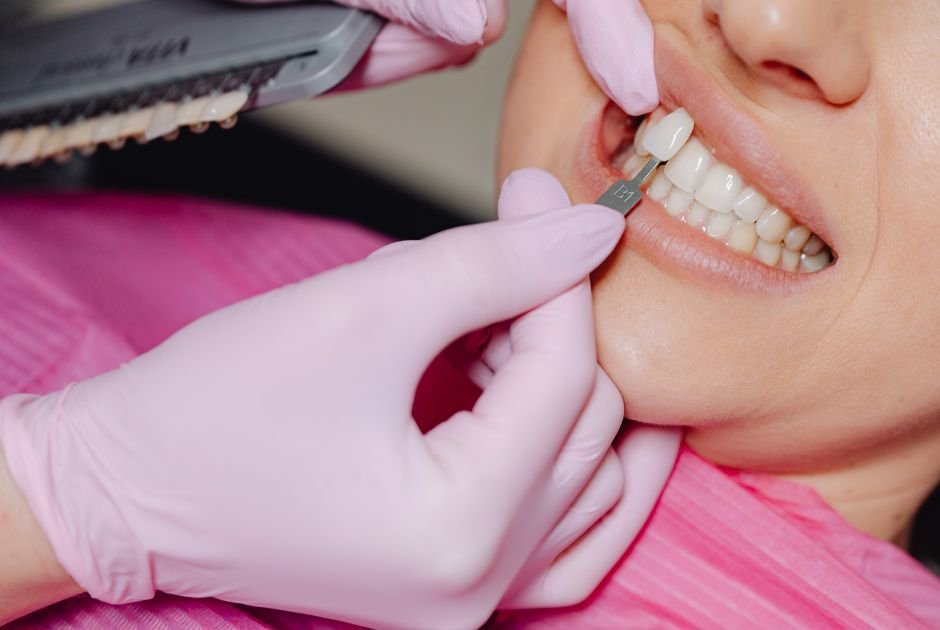

If you’ve been looking into ways to improve your smile, you’ve most likely come across both composite bonding and veneers. They’re two of the most popular cosmetic dentistry treatments available and on the surface, they seem to do a similar job. Both enhance the appearance of your teeth. Both can improve shape, colour, and symmetry. But they do work quite differently and choosing between them isn’t just a matter of preference.
Here’s a breakdown of both options to help you understand which might be the better fit for you.
What is composite bonding?
Composite bonding involves applying a tooth-coloured resin directly onto the surface of your teeth. The material is carefully shaped and sculpted by your dentist to improve the appearance of chips, uneven edges, small gaps or discolouration – then hardened and polished to blend naturally with the surrounding teeth.
One of the biggest draws of composite bonding is how minimally invasive it is. In most cases, you won’t need any drilling. The resin is added to the existing tooth rather than removing any of it, which means the treatment is often reversible and your natural tooth structure is left largely intact. For patients who want a cosmetic improvement without committing to a more involved procedure, that’s a big advantage.
What are veneers?
Veneers are thin shells – normally made from porcelain materials like Emax or zirconia – that are bonded to the front surface of the teeth. They’re custom-made to precise specifications and designed to deliver a highly aesthetic, long-lasting result.
Porcelain veneers are considerably stronger than composite resin, which is reflected in both their durability and their finish. The translucency of high-quality porcelain closely mimics natural tooth enamel, giving veneers a particularly natural appearance – especially if you’re opting for a full smile transformation.
Depending on your tooth shape and the particular veneer being used, a small amount of preparation may be needed to ensure the veneer sits flush and looks proportionate. In some cases, no-prep options are available, we’ll be able to advise once we’ve had a chance to assess your individual teeth.
How do they compare?
Both treatments can produce impressive results but they suit different situations. Some of the key differences are:
Durability. Composite bonding normally lasts around five years before it may need refreshing or replacing. Veneers, made from stronger ceramic materials, are built to last considerably longer and hold up better against everyday wear.
Stain resistance. Composite resin can pick up staining over time – coffee, tea and red wine all take their toll. Porcelain is far more resistant to discolouration, which helps keep the results better for longer.
Appearance. Both options produce natural-looking results but porcelain veneers offer a higher level of colour stability and a finish that more closely replicates the subtle translucency of natural enamel. For a full smile makeover, veneers tend to deliver a more uniform result.
Tooth preparation. Composite bonding is additive – material goes on, nothing comes off. Veneers may need a small amount of reshaping to the tooth surface, though this varies case by case.
Cost. Composite bonding is the more affordable option upfront. Veneers are a higher initial investment but their longevity means the long-term value often balances out – particularly if you’re looking for a result that lasts.
Repairability. If composite bonding chips or wears, it can usually be repaired relatively easily. A damaged veneer is more likely to need replacing entirely.
When composite bonding makes sense
Bonding tends to be the right choice for patients who want subtle, targeted improvements rather than a full transformation. It works particularly well for small chips, minor gaps, uneven tooth edges or slight discolouration and it’s well suited to patients who want a minimally invasive approach or are working within a tighter budget.
It’s also worth considering as a starting point. Some patients use composite bonding to trial the look of a changed smile before committing to something more permanent.
When veneers are the better option
If you’re looking for a more comprehensive smile makeover – particularly one that needs to stand the test of time – veneers are usually the stronger choice. They’re especially well-suited to patients with significant discolouration that hasn’t responded to whitening, teeth with more structural irregularities, or anyone who wants a highly consistent, long-lasting aesthetic result across multiple teeth.
Veneers are also worth considering if staining is a known concern. The porcelain surface resists discolouration in a way that composite simply doesn’t.
One thing worth knowing before you decide
Your tooth shape and position matter more than you realise when it comes to choosing between these treatments. Composite bonding adds a layer of material to the front of the tooth – which works beautifully in most cases but if your teeth already sit slightly forward, adding further thickness may not produce the result you’re hoping for.
This is exactly why a proper consultation is essential before committing to either treatment. A cosmetic dentist will assess your tooth position, your bite and your overall smile to recommend the approach most likely to get you the outcome you want – rather than simply offering whichever treatment you’ve asked about.
The bottom line
Composite bonding and veneers are both excellent cosmetic treatments – the question is which one is right for your teeth, your goals and your budget. If you’re after a quick, minimally invasive refresh, bonding is a brilliant option. If you want a long-lasting, highly aesthetic transformation, veneers are likely to serve you better.
The best place to start is a conversation. Get in touch with the Smile9 team to book a consultation and we’ll help you work out which route makes the most sense for your smile.