



There’s a specific kind of dread that builds up around dental appointments – not necessarily because of past bad experiences but often just because of the unknown. What are they actually going to do in there? Is it going to hurt? How long will it take?
The reality is that a routine dental check-up is one of the more straightforward appointments you’ll have. It’s focused almost entirely on prevention – catching small things before they become bigger ones – and for most patients, it’s completely comfortable. Here’s exactly what happens, step by step.
Why check-ups matter
It’s easy to fall into the habit of just going for a check-up when something feels wrong. In fact, the whole point is the opposite – it’s about making sure nothing goes wrong in the first place.
Dental problems rarely announce themselves early. Decay, gum disease and even some infections can develop for months before you notice any symptoms. A routine examination picks these things up while they’re still simple to deal with, rather than waiting until treatment becomes more complex and more costly.
There’s also a broader principle at work here. Good oral health is the foundation everything else is built on. Whether you’re interested in cosmetic treatment down the line or simply want to keep your teeth in good shape for the long term, regular check-ups are what make that possible. You wouldn’t build on unstable ground and the same logic applies here.
Step 1: Medical history and a chat about your concerns
Every check-up starts with a chat. Your dentist will review your medical history with you and ask about any medications you might be taking – both of which can affect your oral health in ways that aren’t always obvious. Certain medications, for example, can cause dry mouth, which increases the risk of decay.
This is also your chance to raise anything that’s been on your mind – any sensitivity, discomfort, something that doesn’t look or feel quite right. Don’t hold back. The more we know, the more tailored our assessment can be.
Step 2: Examination of your teeth
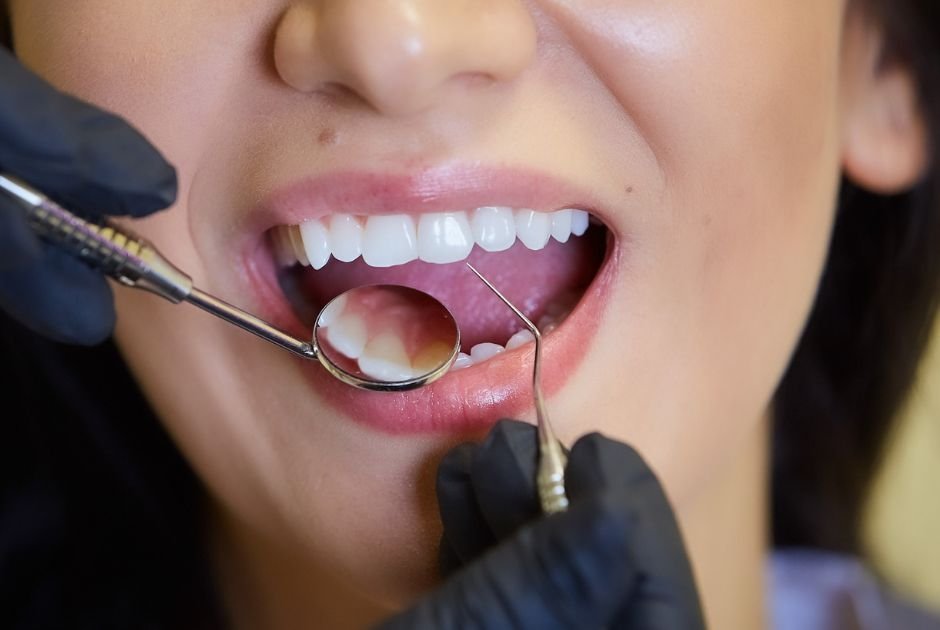
This is the core of the appointment. Your dentist will examine each tooth carefully, looking for signs of decay, cracks, wear or damage. Existing fillings, crowns, or other restorations will also be checked to make sure they’re still doing their job properly.
Catching a small cavity early means a straightforward filling. Left too long, the same issue can develop into something that needs much more involved treatment. Early detection genuinely makes a difference.
Step 3: Gum health assessment
Healthy gums are just as important as heathy teeth and they’re so often overlooked. We’ll check for signs of gum disease including inflammation, bleeding or recession. Gum disease is extremely common and – in its early stages – very treatable. The problem is that it tends to be painless until it’s much more advanced, which is exactly why it needs to be checked at every visit.
Step 4: X-rays (when needed)
X-rays aren’t necessarily taken at every appointment but when they are, they provide information that simply isn’t visible to the naked eye – decay between teeth, issues at the root, bone levels beneath the gum line. They’re quick, comfortable, and a really useful diagnostic tool. We can even take a 3D scan of your teeth so if there is anything going on in there, you’ll be able to see it for yourself on the screen which most patients find fascinating!
Step 5: Bite and alignment assessment
We’ll also look at how your teeth come together when you bite. Uneven pressure across the teeth causes wear over time and in some cases, can lead to chips, cracks or jaw discomfort. Spotting bite issues early means they can be monitored or addressed before they cause lasting damage.
Step 6: Oral cancer screening
This one surprises some patients but it’s a routine part of every examination. Your dentist will check the soft tissues of your mouth – tongue, cheeks, gums and throat – for anything that warrants a closer look. As with most things in dentistry, early detection makes an enormous difference to outcomes.
Step 7: Personalised advice and next steps
At the end of your appointment, your dentist will talk you through what they’ve found and what, if anything, needs attention. That might be a recommendation to improve a particular area of your brushing routine, a referral for a hygiene visit, a note to monitor something over the next six months or a conversation about treatment options if something needs addressing.
If you’ve had cosmetic treatment in mind – whitening, straightening, bonding – this is also where that conversation starts. Any cosmetic work needs to be built on a healthy foundation, so your dentist will want to make sure everything is in good shape before moving forward with anything aesthetic.
How long does it take?
A routine check-up typically takes around 20 to 30 minutes. If X-rays are needed or your dentist wants to spend extra time on a particular area, it may run a little longer but it’s rarely a significant time commitment.
Does it hurt?
For the vast majority of patients, a check-up is completely painless. The examination itself involves your dentist looking, checking and occasionally probing gently around the gums – nothing invasive. X-rays are quick and comfortable. If you do have any anxiety about appointments, please do talk to us beforehand so your dentist can make sure you feel at ease.
The bigger picture
A check-up every six months might feel like a small thing but it’s one of the very best things you can do for your long-term dental health. Problems caught early are almost always easier, quicker, and less expensive to treat. More importantly, regular visits mean you’re far less likely to find yourself needing significant treatment in the first place.
If you’re overdue a check-up or you’ve been putting one off, there’s no better time than now. Get in touch with the Smile9 team to book your appointment — we’ll make sure you know exactly what to expect.